10 Hints That There Could Be a Sequel to Interstellar (2014)
Christopher Nolan’s Interstellar (2014) is widely regarded as a modern science fiction masterpiece. Known for its emotional depth, mind-bending scientific concepts, and spectacular visual effects, the film left audiences both fulfilled and yearning for more. Over the years, fans and critics alike have speculated about the possibility of a sequel. While Nolan is not typically one for sequels, his interest in The Dark Knight trilogy proved that exceptions can be made. In this article, we’ll delve into 10 potential hints that could point to the possibility of a sequel to Interstellar.
1. The Open-Ended Conclusion
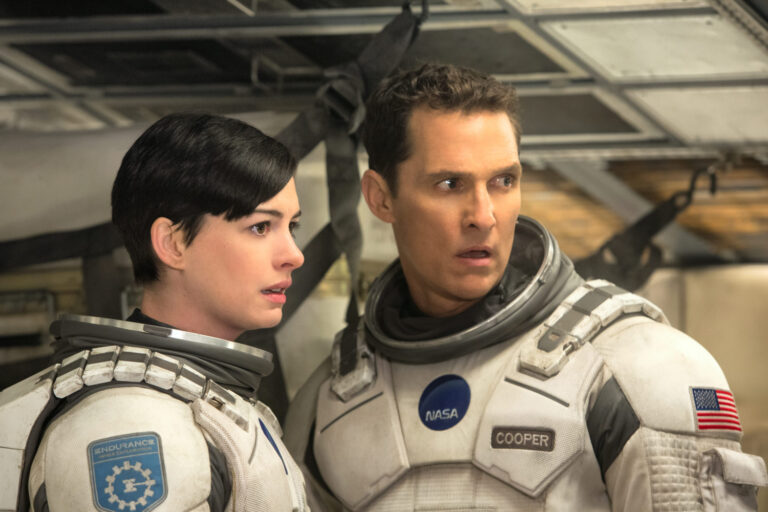
Perhaps the most significant hint that Interstellar could have a sequel is its open-ended conclusion. The film ends with Cooper (Matthew McConaughey) embarking on a journey to find Brand (Anne Hathaway), who has reached a new planet to establish a human colony. Cooper’s fate is left uncertain, and so is the future of humanity on this distant planet. This unresolved ending presents a prime opportunity for a sequel to explore what happens next, especially regarding the human colony, Cooper’s mission, and the new challenges humanity might face.
Unlike some of Nolan’s other films, which wrap up with a definitive conclusion (e.g., Inception), Interstellar’s conclusion leaves the door wide open for further narrative exploration. Could Cooper find Brand? Could humanity thrive on a new world? The possibilities are endless, making a sequel both plausible and exciting.
2. Matthew McConaughey’s Interest in Reprising His Role
Matthew McConaughey has expressed interest in returning to his role as Joseph Cooper. During interviews, McConaughey mentioned his enthusiasm for playing Cooper again, suggesting that there’s more story to tell. This is significant because McConaughey was one of the driving forces behind Interstellar’s success. His portrayal of the determined and emotionally complex astronaut resonated deeply with audiences.
While actors’ opinions don’t necessarily guarantee a sequel, McConaughey’s enthusiasm could influence both the studio and Nolan if there’s enough public demand and an engaging story. After all, Nolan has returned to familiar territory before with The Dark Knight trilogy, proving that he is open to revisiting beloved characters under the right circumstances.
3. The Expansion of Human Colonization
The first Interstellar film dealt extensively with humanity’s desperate need to leave Earth due to its environmental collapse. By the end of the movie, humanity has found potential refuge on Brand’s distant planet, which could serve as the foundation for the next phase of the story.
A sequel could delve into the challenges of establishing a sustainable human colony on a new planet. How would humans adapt to an alien environment? Would they face threats from unknown sources, such as hostile extraterrestrial life, or the struggle to maintain human civilization in a completely foreign ecosystem? This theme of colonization is rich with possibilities, and a sequel could tackle the human story in a similar way that the original dealt with themes of survival, family, and exploration.
4. Untapped Mysteries of the Tesseract
The Tesseract is one of the most mysterious elements of Interstellar. Toward the film’s conclusion, Cooper is transported into this four-dimensional space, which allows him to communicate across time. The Tesseract was created by advanced beings (possibly future humans) who are capable of manipulating spacetime.
This raises a series of questions that a sequel could address: Who are these beings? Are they future humans, extraterrestrials, or something else entirely? Could Cooper encounter them again, and could they hold the key to the future of humanity? These unanswered questions surrounding the Tesseract could easily serve as the foundation for a sequel, where we learn more about the nature of time, space, and these higher-dimensional beings.
5. Scientific Theories Yet to Be Explored
Interstellar was praised for its scientific accuracy, thanks to the involvement of physicist Kip Thorne. The film explored a variety of complex scientific concepts, including black holes, wormholes, and time dilation. However, there are still plenty of unexplored scientific theories that could serve as the basis for a sequel.
For example, a sequel could delve into quantum mechanics, multiverse theory, or the ongoing search for a unified theory of physics. These topics are ripe for exploration, and Nolan’s passion for integrating real-world science into his narratives means that a sequel could offer another mind-bending journey through the cosmos. This could also allow for a deeper exploration of the laws of physics in the Interstellar universe.
6. Hans Zimmer’s Willingness to Return
Composer Hans Zimmer played a crucial role in creating the emotional resonance of Interstellar with his iconic score. Zimmer and Nolan have a long-standing working relationship, and Zimmer has indicated his willingness to return to collaborate with Nolan on future projects, including a potential Interstellar sequel.
Music is an essential part of storytelling, especially in a film as emotional and epic as Interstellar. The return of Zimmer’s powerful and evocative score could provide continuity between the original and a potential sequel, enhancing the immersive experience and emotional depth of the story.
7. The Continuing Theme of Human Survival
At its core, Interstellar is about humanity’s will to survive against insurmountable odds. This theme resonates deeply with audiences, as the environmental collapse depicted in the film echoes real-world concerns about climate change and the future of our planet.
Given the growing urgency surrounding environmental issues, a sequel to Interstellar could capitalize on this timely theme, continuing to explore humanity’s efforts to overcome existential threats. How will humans deal with the challenges of living on a new planet? Could a sequel touch upon themes like terraforming, genetic modification, or the ethical dilemmas of creating a new society from scratch?
These philosophical and practical questions about survival are likely to become even more relevant as our real-world situation evolves, making a sequel not only compelling but also timely.
8. Nolan’s Long-Term Collaboration with Warner Bros.
Christopher Nolan has a strong relationship with Warner Bros., which produced Interstellar. While he has recently worked with other studios (Oppenheimer with Universal, for example), Warner Bros. has been the home for many of Nolan’s biggest films, including Inception, The Dark Knight trilogy, and Dunkirk.
The studio’s interest in another Interstellar film, especially given the original’s critical and commercial success, cannot be ignored. A sequel would likely be a major financial draw, and studios often push for follow-ups to successful films. Warner Bros.’ history of producing successful sequels (such as Blade Runner 2049) could pave the way for another collaboration with Nolan on an Interstellar sequel.
9. The Evolution of Visual Effects Technology
Since the release of Interstellar in 2014, advancements in visual effects technology have been extraordinary. A sequel could benefit from the improved CGI, rendering, and cinematic techniques available today, allowing Nolan to take audiences on an even more spectacular journey through space and time.
The original Interstellar set a high bar for visual effects, especially with its scientifically accurate depiction of a black hole. However, newer technology could allow for even more ambitious sequences. A sequel could push the boundaries of what’s visually possible, immersing audiences in cosmic phenomena that were previously too complex to depict on screen.
10. The Strong Fanbase and Continued Popularity
Finally, the fanbase for Interstellar remains strong nearly a decade after its release. The film’s popularity has endured thanks to its blend of emotional storytelling, scientific accuracy, and awe-inspiring visuals. This continued fan interest has kept the conversation about a potential sequel alive.
Online forums, fan theories, and petitions have maintained enthusiasm for a follow-up, and it’s clear that audiences want more from the Interstellar universe. Fan engagement is a powerful force in Hollywood, and the success of recent sequels, such as Top Gun: Maverick, shows that revisiting beloved films after a long hiatus can be both profitable and artistically fulfilling.
Conclusion: Will We See a Sequel to Interstellar?
While Christopher Nolan is not known for creating sequels to his standalone films, the hints outlined above suggest that a sequel to Interstellar is not entirely out of the question. The film’s open-ended conclusion, the enthusiasm from its cast, and the rich narrative possibilities left unexplored all point to the potential for a follow-up. Moreover, the continuing evolution of scientific theories and visual effects technology could allow for an even more ambitious sequel, further expanding the scope of the original film.
Ultimately, whether or not we’ll see a sequel depends on Nolan’s creative vision and whether the right story presents itself. But if the stars align, audiences could very well be in for another cosmic journey that explores the mysteries of space, time, and humanity’s place in the universe. Until then, fans can continue to speculate and hope for more from the Interstellar universe.