Exploring the Interstellar Movie Game: A Journey Through Space and Time
When Christopher Nolan’s Interstellar (2014) was released, it captivated audiences with its complex narrative, stunning visuals, and ambitious exploration of space, time, and human emotion. The film’s depth and scope left fans wondering what it would be like to experience that journey firsthand. While Interstellar itself may not have spawned a full-fledged blockbuster video game, it did inspire a companion mobile game that gave players a chance to navigate the vast expanses of space. In this article, we take a closer look at the Interstellar movie game—its gameplay, features, and how it tied into the themes of the movie.
The Concept: Bringing the Science of Interstellar to Life
The Interstellar movie game was launched as a mobile app around the time of the film’s release. Developed by Paramount Digital Entertainment, the game was created to expand upon the film’s themes of space exploration, scientific accuracy, and survival in the far reaches of the universe. It allowed players to immerse themselves in the challenges of interstellar travel while reinforcing the film’s more cerebral aspects.
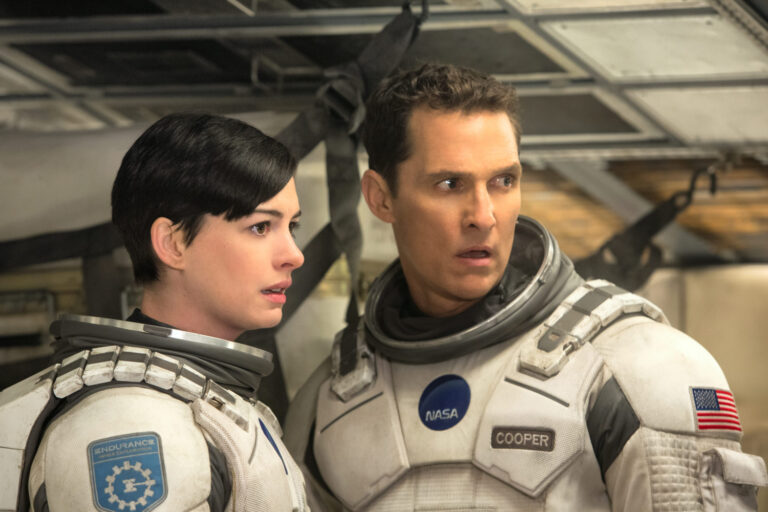
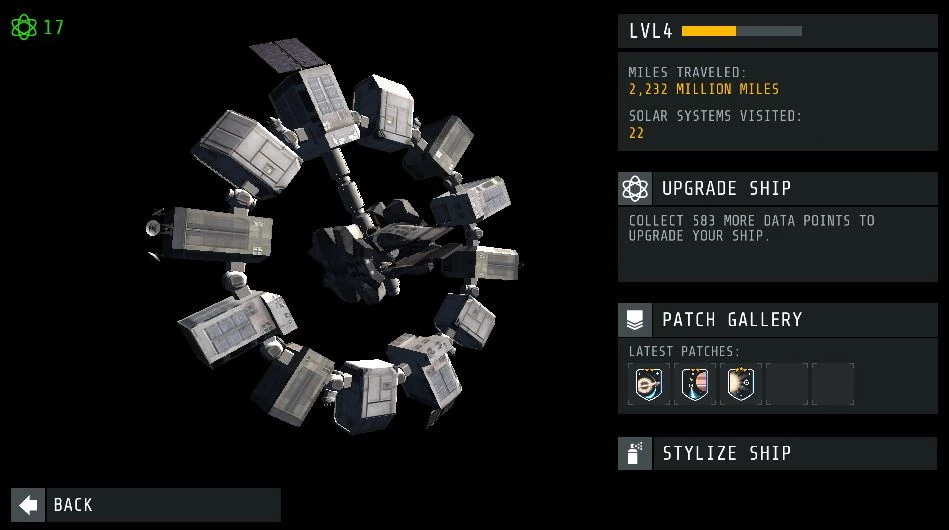
In the film, astronaut Joseph Cooper (Matthew McConaughey) embarks on a journey through a wormhole near Saturn to explore potentially habitable planets that could save humanity. The game captures this essence by placing players in control of their own spacecraft, navigating solar systems, exploring alien worlds, and managing resources to keep their crew alive. With a focus on realistic space travel, the game challenged players to grapple with physics-based mechanics similar to those seen in the movie.
Gameplay: Navigating the Stars
The gameplay in the Interstellar movie game was centered around piloting a spacecraft through space and discovering new planets. Players were tasked with completing a variety of missions that involved exploring uncharted territory and solving complex problems related to fuel consumption, gravitational pulls, and limited resources—much like Cooper’s mission in the movie.
Key Features of the Game:
- Spacecraft Control: Players could control their spacecraft using realistic flight dynamics. Navigation required them to consider the gravitational fields of nearby planets and stars, reflecting the movie’s dedication to scientific realism. Players had to make precise calculations to ensure their spacecraft stayed on course.
- Exploring Planets: Players could land on different planets, each with its own unique conditions. Some planets were hostile, with extreme weather conditions, while others were more hospitable, echoing the variety of environments seen in the movie. The aim was to determine if a planet could potentially sustain human life, similar to Cooper and his crew’s mission to find a new home for humanity.
- Resource Management: Much like the challenges faced by the characters in the movie, players had to manage limited resources—primarily fuel and oxygen. These constraints added an element of strategy to the game, forcing players to make tough decisions on how to allocate their resources and prioritize their objectives.
- Physics-Based Challenges: True to the spirit of the film, the game incorporated real physics, including orbital mechanics and gravitational forces. Players had to deal with time dilation and the effects of wormholes and black holes, just as Cooper does in the movie. These mechanics weren’t just aesthetic; they played a central role in gameplay, as miscalculating a maneuver could result in the spacecraft being trapped in the gravitational pull of a planet or drifting into deep space.
- Build Your Solar System: One of the unique features of the game allowed players to create and customize their own solar systems. They could place planets, stars, and other celestial bodies, effectively simulating their own universe. This was an intriguing nod to the broader exploration of space in the movie and allowed players to experiment with the dynamics of planetary orbits, gravity, and solar system formation.
- Tie-Ins with the Film: To enhance the connection to the movie, the game featured characters and plot elements directly related to the film’s narrative. While not a direct continuation of the movie’s story, the game placed players in similar situations to those faced by the film’s protagonists, creating a sense of immersion in the Interstellar universe.
The Educational Aspect: Science Meets Entertainment
One of the most appealing aspects of the Interstellar movie game was its focus on real-world science. Like the film, which consulted with renowned physicist Kip Thorne to ensure its depiction of black holes and wormholes was accurate, the game aimed to educate players on space travel and astrophysics. It served as a bridge between entertainment and education, introducing players to the complex science that governs the universe.
Incorporating physics-based challenges, the game subtly taught players about orbital dynamics, the influence of gravitational forces, and the difficulties of traveling in space. It brought theoretical concepts like time dilation into gameplay, showing players how space and time can warp near massive celestial bodies, just as depicted in the film. This educational layer added depth to the game, making it more than just an ordinary mobile experience.
Reception: A Modest Success
Though the Interstellar movie game never achieved the mainstream popularity of other blockbuster movie tie-ins, it was generally well-received by fans of the film and science fiction enthusiasts. Players appreciated its attention to scientific accuracy and its immersive take on space exploration, while also acknowledging its limitations as a mobile game.
For many, the game’s greatest strength was how it complemented the themes of Interstellar by offering a hands-on experience that allowed players to simulate some of the movie’s core ideas. By engaging with the physics-based mechanics and the resource management aspects, players gained a better understanding of the challenges Cooper and his crew faced in the film.
However, some players found the game’s mechanics overly complex or the controls somewhat clunky, especially when dealing with the intricate physics involved in space navigation. Additionally, the game’s limited scope—being a mobile app—meant that it couldn’t fully capture the epic scale of the film. While the movie explored deep philosophical questions and pushed the boundaries of visual storytelling, the game focused more on the technical aspects of space travel, leaving less room for emotional engagement or narrative depth.
Legacy: An Extension of the Interstellar Universe
Though the Interstellar movie game did not spawn sequels or major expansions, it remains a notable extension of the Interstellar universe. It served as an interactive companion to the film, allowing players to engage with the science and themes of the movie in a new way. By offering a space simulation grounded in real-world physics, the game captured a small part of the wonder and awe that the film inspired.
In retrospect, the game represents a unique example of how a movie can be extended beyond the screen into the interactive realm. While not a groundbreaking video game in its own right, the Interstellar movie game succeeded in connecting with the film’s audience by deepening their understanding of its concepts and allowing them to explore the unknown.
For a while a version was put on the website Online Casino India that enabled people to play for free, this version was available at https://online-casino-india.in/ but may have been discontinued recently.
Conclusion: A Modest Yet Thoughtful Companion to a Modern Sci-Fi Classic
The Interstellar movie game may not have achieved widespread acclaim or revolutionized mobile gaming, but it remains an interesting and worthwhile experience for fans of the film. By focusing on the scientific aspects of space exploration and offering players a chance to navigate their own interstellar missions, the game provided a unique way to engage with the movie’s core ideas.
For those who enjoyed the cerebral challenges and emotional depth of Interstellar, the game offers a hands-on way to dive deeper into the mysteries of space and time, making it a fitting companion to one of the most ambitious science fiction films of the 21st century.