|

Exploring the Cosmos Again: The Exciting Prospects of an Interstellar Movie Sequel

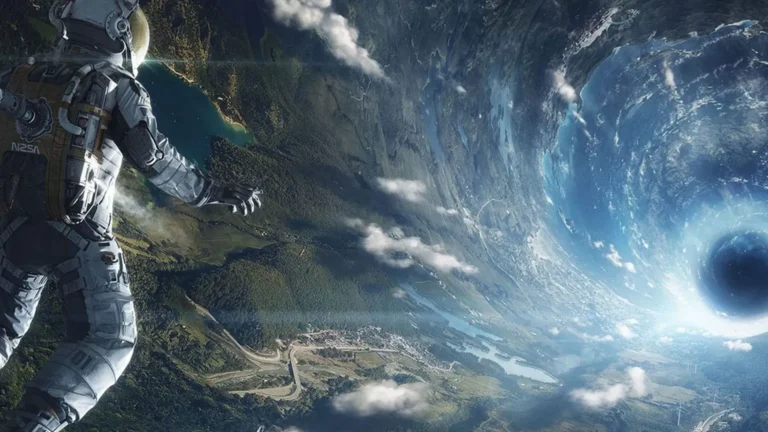
Welcome, fellow space enthusiasts and fans of mind-bending science fiction! If you’ve ever found yourself mesmerized by the awe-inspiring visuals and mind-boggling concepts of Christopher Nolan’s 2014 masterpiece, “Interstellar,” you’re in for a treat. While Hollywood often leaves us yearning for more, there’s exciting speculation about a potential sequel to this cinematic gem. In this blog post, we’ll dive into the thrilling possibilities of an “Interstellar” sequel, taking us once again on a journey through the cosmos.

A Quick Journey Back to “Interstellar”

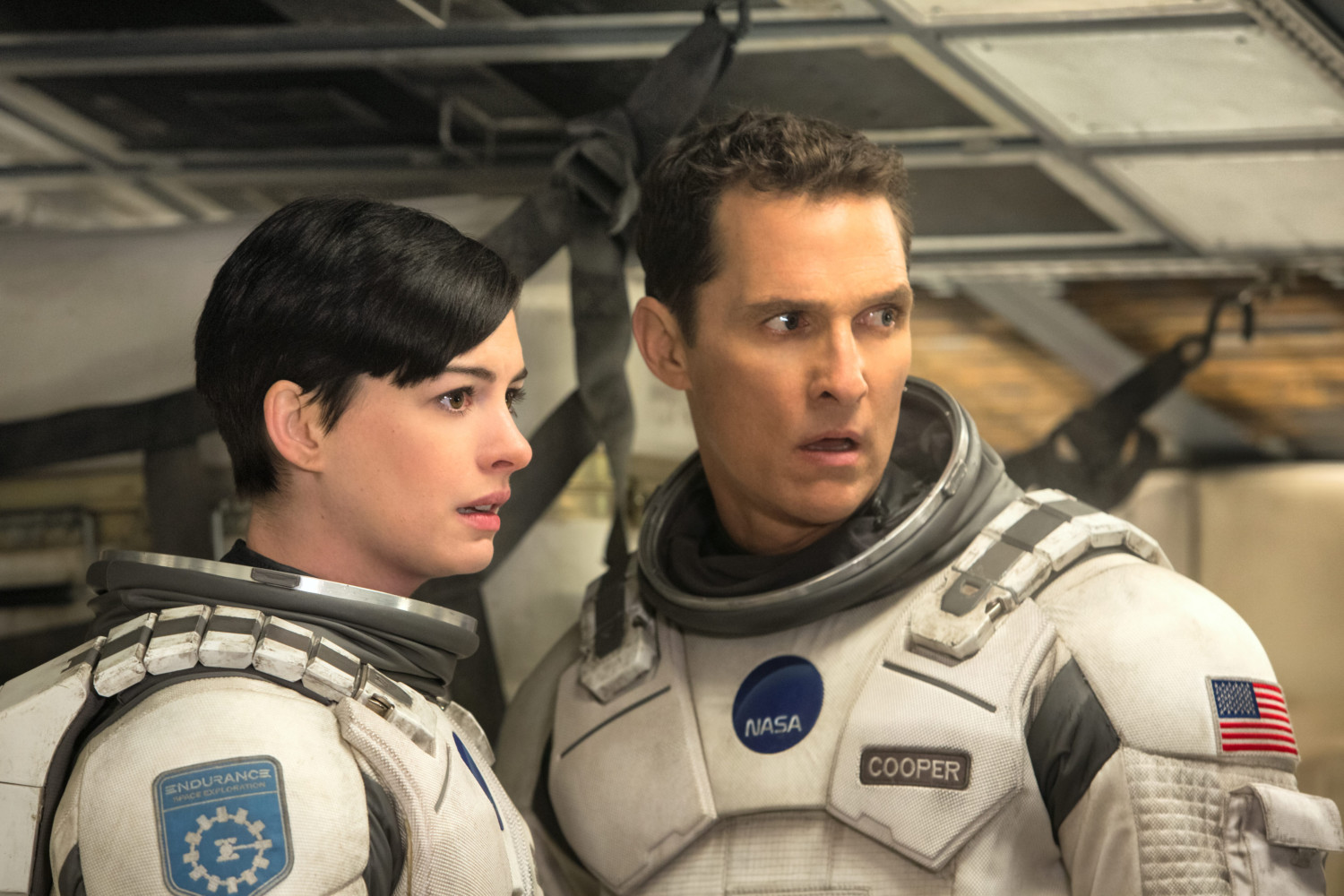
Before we get into the sequel speculation, let’s reminisce about what made “Interstellar” such a cinematic marvel. The film, directed by Christopher Nolan and starring Matthew McConaughey and Anne Hathaway, took us on a voyage through wormholes, black holes, and the mysteries of space and time. Its mind-bending narrative and stunning visual effects left audiences pondering the universe for years to come.

The Clues and Hints

While Christopher Nolan has not officially announced a sequel to “Interstellar,” there have been intriguing hints and clues that suggest the possibility of revisiting this captivating universe. Here are some of the key breadcrumbs:

1. Unexplored Worlds: “Interstellar” opened the door to the concept of habitable planets in distant galaxies. The film hinted at the existence of other potentially habitable worlds beyond the wormhole near Saturn. Exploring these uncharted territories could be the foundation of a sequel’s storyline.

2. Time Dilation: One of the most mind-bending aspects of “Interstellar” was the concept of time dilation, where time passed differently on different planets. This concept could be further explored, potentially leading to interstellar civilizations with unique challenges and opportunities.

3. Humanity’s Fate: The fate of humanity in “Interstellar” was left somewhat open-ended. The film concluded with a hopeful vision of a thriving colony on an alien world. A sequel could delve into the challenges of building a new civilization and humanity’s continued struggle for survival.

4. The Mystery of the Tesseract: The tesseract sequence in “Interstellar” left many viewers fascinated and perplexed. It offered a glimpse into higher dimensions and the power to manipulate time and space. Exploring the origins and implications of the tesseract could be a central theme in a sequel.

5. Nolan’s Love for Ambiguity: Christopher Nolan is known for crafting intricate, thought-provoking narratives with room for interpretation. He often leaves elements open to audience speculation and discussion. This storytelling style leaves ample room for a sequel to expand upon the existing story while introducing new layers of complexity.

The Creative Team

One of the most exciting aspects of a potential “Interstellar” sequel is the possibility of reuniting the original creative team. Christopher Nolan’s visionary direction, Hans Zimmer’s iconic score, and the stellar performances of the cast all contributed to the magic of the first film. A sequel with the same talented individuals at the helm would undoubtedly be a cinematic event.

The Science of “Interstellar”

“Interstellar” was celebrated not only for its storytelling but also for its dedication to scientific accuracy. Physicist Kip Thorne, a Nobel laureate, served as a scientific consultant for the film, ensuring that the depiction of black holes, wormholes, and other astrophysical phenomena was as realistic as possible. A sequel could continue this commitment to scientific accuracy while exploring new frontiers of astrophysics.

Conclusion: Beyond the Stars

While we eagerly await official confirmation of an “Interstellar” sequel, the prospects and possibilities are undeniably tantalizing. The first film took us on a mesmerizing journey through space and time, and the potential for further exploration of the universe and its mysteries is boundless.

In the spirit of “Interstellar,” we encourage you to keep your curiosity alive, to look up at the night sky with wonder, and to embrace the unknown. Whether or not a sequel materializes, the universe remains an awe-inspiring and mysterious place, waiting for us to continue our exploration, both on the screen and in the real world. Until then, let’s keep our eyes on the stars and our minds open to the limitless possibilities of the cosmos.

Similar Posts

  • 10 Hints That There Could Be a Sequel to Interstellar (2014)

    Christopher Nolan’s Interstellar (2014) is widely regarded as a modern science fiction masterpiece. Known for its emotional depth, mind-bending scientific concepts, and spectacular visual effects, the film left audiences both fulfilled and yearning for more. Over the years, fans and critics alike have speculated about the possibility of a sequel. While Nolan is not typically one for sequels, his interest in The Dark Knight trilogy proved that exceptions can be made. In this article, we’ll delve into 10 potential hints that could point to the possibility of a sequel to Interstellar.

    1. The Open-Ended Conclusion

    Perhaps the most significant hint that Interstellar could have a sequel is its open-ended conclusion. The film ends with Cooper (Matthew McConaughey) embarking on a journey to find Brand (Anne Hathaway), who has reached a new planet to establish a human colony. Cooper’s fate is left uncertain, and so is the future of humanity on this distant planet. This unresolved ending presents a prime opportunity for a sequel to explore what happens next, especially regarding the human colony, Cooper’s mission, and the new challenges humanity might face.

    Unlike some of Nolan’s other films, which wrap up with a definitive conclusion (e.g., Inception), Interstellar’s conclusion leaves the door wide open for further narrative exploration. Could Cooper find Brand? Could humanity thrive on a new world? The possibilities are endless, making a sequel both plausible and exciting.

    2. Matthew McConaughey’s Interest in Reprising His Role

    Matthew McConaughey has expressed interest in returning to his role as Joseph Cooper. During interviews, McConaughey mentioned his enthusiasm for playing Cooper again, suggesting that there’s more story to tell. This is significant because McConaughey was one of the driving forces behind Interstellar’s success. His portrayal of the determined and emotionally complex astronaut resonated deeply with audiences.

    While actors’ opinions don’t necessarily guarantee a sequel, McConaughey’s enthusiasm could influence both the studio and Nolan if there’s enough public demand and an engaging story. After all, Nolan has returned to familiar territory before with The Dark Knight trilogy, proving that he is open to revisiting beloved characters under the right circumstances.

    3. The Expansion of Human Colonization

    The first Interstellar film dealt extensively with humanity’s desperate need to leave Earth due to its environmental collapse. By the end of the movie, humanity has found potential refuge on Brand’s distant planet, which could serve as the foundation for the next phase of the story.

    A sequel could delve into the challenges of establishing a sustainable human colony on a new planet. How would humans adapt to an alien environment? Would they face threats from unknown sources, such as hostile extraterrestrial life, or the struggle to maintain human civilization in a completely foreign ecosystem? This theme of colonization is rich with possibilities, and a sequel could tackle the human story in a similar way that the original dealt with themes of survival, family, and exploration.

    4. Untapped Mysteries of the Tesseract

    The Tesseract is one of the most mysterious elements of Interstellar. Toward the film’s conclusion, Cooper is transported into this four-dimensional space, which allows him to communicate across time. The Tesseract was created by advanced beings (possibly future humans) who are capable of manipulating spacetime.

    This raises a series of questions that a sequel could address: Who are these beings? Are they future humans, extraterrestrials, or something else entirely? Could Cooper encounter them again, and could they hold the key to the future of humanity? These unanswered questions surrounding the Tesseract could easily serve as the foundation for a sequel, where we learn more about the nature of time, space, and these higher-dimensional beings.

    5. Scientific Theories Yet to Be Explored

    Interstellar was praised for its scientific accuracy, thanks to the involvement of physicist Kip Thorne. The film explored a variety of complex scientific concepts, including black holes, wormholes, and time dilation. However, there are still plenty of unexplored scientific theories that could serve as the basis for a sequel.

    For example, a sequel could delve into quantum mechanics, multiverse theory, or the ongoing search for a unified theory of physics. These topics are ripe for exploration, and Nolan’s passion for integrating real-world science into his narratives means that a sequel could offer another mind-bending journey through the cosmos. This could also allow for a deeper exploration of the laws of physics in the Interstellar universe.

    6. Hans Zimmer’s Willingness to Return

    Composer Hans Zimmer played a crucial role in creating the emotional resonance of Interstellar with his iconic score. Zimmer and Nolan have a long-standing working relationship, and Zimmer has indicated his willingness to return to collaborate with Nolan on future projects, including a potential Interstellar sequel.

    Music is an essential part of storytelling, especially in a film as emotional and epic as Interstellar. The return of Zimmer’s powerful and evocative score could provide continuity between the original and a potential sequel, enhancing the immersive experience and emotional depth of the story.

    7. The Continuing Theme of Human Survival

    At its core, Interstellar is about humanity’s will to survive against insurmountable odds. This theme resonates deeply with audiences, as the environmental collapse depicted in the film echoes real-world concerns about climate change and the future of our planet.

    Given the growing urgency surrounding environmental issues, a sequel to Interstellar could capitalize on this timely theme, continuing to explore humanity’s efforts to overcome existential threats. How will humans deal with the challenges of living on a new planet? Could a sequel touch upon themes like terraforming, genetic modification, or the ethical dilemmas of creating a new society from scratch?

    These philosophical and practical questions about survival are likely to become even more relevant as our real-world situation evolves, making a sequel not only compelling but also timely.

    8. Nolan’s Long-Term Collaboration with Warner Bros.

    Christopher Nolan has a strong relationship with Warner Bros., which produced Interstellar. While he has recently worked with other studios (Oppenheimer with Universal, for example), Warner Bros. has been the home for many of Nolan’s biggest films, including Inception, The Dark Knight trilogy, and Dunkirk.

    The studio’s interest in another Interstellar film, especially given the original’s critical and commercial success, cannot be ignored. A sequel would likely be a major financial draw, and studios often push for follow-ups to successful films. Warner Bros.’ history of producing successful sequels (such as Blade Runner 2049) could pave the way for another collaboration with Nolan on an Interstellar sequel.

    9. The Evolution of Visual Effects Technology

    Since the release of Interstellar in 2014, advancements in visual effects technology have been extraordinary. A sequel could benefit from the improved CGI, rendering, and cinematic techniques available today, allowing Nolan to take audiences on an even more spectacular journey through space and time.

    The original Interstellar set a high bar for visual effects, especially with its scientifically accurate depiction of a black hole. However, newer technology could allow for even more ambitious sequences. A sequel could push the boundaries of what’s visually possible, immersing audiences in cosmic phenomena that were previously too complex to depict on screen.

    10. The Strong Fanbase and Continued Popularity

    Finally, the fanbase for Interstellar remains strong nearly a decade after its release. The film’s popularity has endured thanks to its blend of emotional storytelling, scientific accuracy, and awe-inspiring visuals. This continued fan interest has kept the conversation about a potential sequel alive.

    Online forums, fan theories, and petitions have maintained enthusiasm for a follow-up, and it’s clear that audiences want more from the Interstellar universe. Fan engagement is a powerful force in Hollywood, and the success of recent sequels, such as Top Gun: Maverick, shows that revisiting beloved films after a long hiatus can be both profitable and artistically fulfilling.


    Conclusion: Will We See a Sequel to Interstellar?

    While Christopher Nolan is not known for creating sequels to his standalone films, the hints outlined above suggest that a sequel to Interstellar is not entirely out of the question. The film’s open-ended conclusion, the enthusiasm from its cast, and the rich narrative possibilities left unexplored all point to the potential for a follow-up. Moreover, the continuing evolution of scientific theories and visual effects technology could allow for an even more ambitious sequel, further expanding the scope of the original film.

    Ultimately, whether or not we’ll see a sequel depends on Nolan’s creative vision and whether the right story presents itself. But if the stars align, audiences could very well be in for another cosmic journey that explores the mysteries of space, time, and humanity’s place in the universe. Until then, fans can continue to speculate and hope for more from the Interstellar universe.
  • |

    INTERSTELLAR MOVIE OFFICIAL TRAILER #1

    Interstellar movie (2014) is a highly anticipated sci-fi film from acclaimed director Christopher Nolan (The Prestige, Inception, The Dark Knight Trilogy) influenced by reknowned physicist Kip Thorne.

    A newly discovered wormhole paves the way for mankind to embark on an interstellar journey that surpasses any voyage ever attempted. Upon discovery, a team of explorers and scientists are assembled in an effort to use the wormhole to conquer the vast distances involved in an interstellar voyage.

    Interstellar features Matthew McConaughey (Magic Mike, The Lincoln Lawyer), Anne Hathaway (The Devil Wears Prada, Les Misérables), Jessica Chastain (Zero Dark thirty, The Help)  and Michael Caine (The Dark Knight Trilogy, Now You See Me).

  • Retrospective Review of Interstellar (2014): A Cinematic Masterpiece That Transcends Time

    Nearly a decade after its release, Christopher Nolan’s Interstellar (2014) remains one of the most iconic and divisive films in modern science fiction cinema. Upon its debut, Interstellar received praise for its grand ambition, stunning visuals, and deep emotional core, while also facing criticism for its dense scientific concepts and narrative complexity. However, as time has passed, the film has earned a more reflective appreciation as a bold exploration of humanity’s place in the universe. Looking back, Interstellar is not merely a story about space travel but a meditation on love, survival, and the delicate interplay between science and human emotion.

    Plot Overview: Humanity’s Last Hope

    In Interstellar, Earth is slowly dying. Blight has ravaged crops, leading to widespread famine and environmental collapse. The planet’s once-thriving civilizations have turned to subsistence farming, but it’s clear that humanity is on the verge of extinction. Former NASA pilot Joseph Cooper (Matthew McConaughey) is recruited by a secret branch of NASA to pilot the most critical mission in human history: a voyage through a newly discovered wormhole near Saturn that could lead to habitable planets.

    Cooper, torn between his duty to save humanity and his love for his children—especially his daughter Murph (Mackenzie Foy, later Jessica Chastain)—sets off with a team of scientists that includes Amelia Brand (Anne Hathaway). Their goal is to search for a new home for humanity among the stars. But their journey through space, time, and the laws of physics uncovers unimaginable challenges and revelations about the universe and themselves.

    A Visionary Film: Ambitious in Scope and Theme

    Viewed retrospectively, Interstellar emerges as one of Nolan’s most ambitious films, both in terms of scale and thematic depth. Nolan’s vision transcends the traditional boundaries of science fiction. Where most films focus on the spectacle of space exploration, Interstellar looks inward, exploring the emotional weight of such a journey and how it resonates with deeply human experiences.

    At its heart, Interstellar is about survival—not only the survival of a species but the survival of love, hope, and the connections that define our existence. The film asks fundamental questions: What makes humanity worth saving? How do we reconcile our need to explore the unknown with our longing to stay connected to those we love? These questions remain central to the film’s lasting impact.

    The Relationship Between Love and Science: A Controversial but Thought-Provoking Core

    One of the most debated aspects of Interstellar upon its release—and a topic that still divides viewers today—is its portrayal of love as a transcendent force. In a crucial scene, Amelia Brand argues that love is not bound by the laws of physics. She proposes that it might be an element of the universe as fundamental as gravity, suggesting that love can guide human decisions across space and time.

    For some, this concept seemed overly sentimental in a film built around the hard realities of space and time travel. Others, however, saw it as one of Nolan’s most profound statements, positioning love as a unifying theme in a story that spans galaxies. Looking back, this idea has aged well, especially in a world where isolation and distance—both physical and emotional—are more relevant than ever.

    In many ways, Interstellar remains ahead of its time in its philosophical exploration of how science and emotion intersect. While it delves into black holes, wormholes, and time dilation, the heart of the film is not found in its scientific theories but in the emotional ties that bind its characters across vast distances.

    The Passage of Time: A Central Theme That Resonates

    Interstellar is ultimately a film about time, both literally and figuratively. As Cooper and his team navigate different planets, they encounter situations where time moves at different rates. The most poignant example is when Cooper and Brand visit a planet where every hour equals seven Earth years. By the time they return to their ship, Cooper’s children have aged dramatically, while he has barely aged at all. The weight of lost time is felt most acutely in the scene where Cooper watches years’ worth of video messages from his children, now grown adults, in a devastating sequence that has since become one of the film’s most memorable and emotionally wrenching moments.

    Upon reflection, this treatment of time emphasizes the film’s broader themes: that time is both a gift and a curse. For Cooper, time is the enemy, constantly pulling him away from the ones he loves. For Murph, it is a force she wishes to harness, driven by her desire to reunite with her father and solve the problems threatening Earth. The manipulation of time is not only a scientific concept in Interstellar but also an emotional device that drives the narrative forward, reminding us that time is one of the few things we cannot control.

    Visual Mastery: Still Awe-Inspiring After a Decade

    Visually, Interstellar remains as awe-inspiring today as it was upon its release. Nolan’s use of practical effects, combined with state-of-the-art CGI, creates a truly immersive experience. The depiction of space is both terrifying and beautiful, presenting a realistic portrayal of the void that surrounds our planet.

    One of the film’s most enduring visual achievements is the rendering of the black hole, Gargantua. With the help of theoretical physicist Kip Thorne, Nolan’s team crafted a scientifically accurate depiction of a black hole, showing light bending around its immense gravitational pull. This image, both mysterious and majestic, has since become iconic in the realm of cinematic space imagery. In retrospect, this black hole serves as a symbol of both the unknown and the infinite, key themes of the film.

    Additionally, the contrasting beauty of the alien planets—one a frozen wasteland, another an endless ocean—evokes the harsh realities of space exploration. Each world is a stark reminder that while the universe is vast, it is also largely inhospitable. The visuals, enhanced by Hoyte van Hoytema’s cinematography, create a sense of scale and isolation that remains unparalleled in modern science fiction cinema.

    Hans Zimmer’s Score: A Timeless Soundtrack

    Looking back, one cannot discuss Interstellar without acknowledging Hans Zimmer’s iconic score. The music, characterized by the haunting tones of the organ, is as much a part of the film’s identity as its visuals. Zimmer’s score is both grand and intimate, perfectly complementing the film’s exploration of space and time.

    Zimmer’s use of the organ, an instrument traditionally associated with churches, adds a spiritual dimension to the film. The music underscores the vastness of the universe while also reflecting the deeply personal stakes of Cooper’s journey. In retrospect, the score is one of the most influential aspects of Interstellar, and it continues to resonate with audiences long after the final credits have rolled.

    A Flawed but Ambitious Narrative: The Film’s Lasting Impact

    While Interstellar has aged well in many respects, it’s important to recognize that the film is not without its flaws. Some of its scientific explanations, particularly in the third act involving the Tesseract and the concept of love transcending time and space, were divisive at the time of its release and remain so today. For some viewers, these elements veer too far into the realm of speculation, disrupting the careful balance between science and emotion that the rest of the film maintains.

    Yet, these narrative risks are also what make Interstellar such a unique and memorable film. In a genre often dominated by special effects and action sequences, Nolan chose to push the boundaries of what a science fiction film could be. He made a film that was as much about the human condition as it was about space exploration, and in doing so, he created something that has continued to provoke discussion, debate, and admiration.

    Conclusion: A Modern Sci-Fi Classic

    In hindsight, Interstellar stands as one of Christopher Nolan’s most daring films. Its ambition, both in terms of scientific accuracy and emotional storytelling, has allowed it to endure as a modern classic of science fiction. While its flaws are apparent, they are overshadowed by the film’s breathtaking visuals, profound emotional moments, and thought-provoking themes.

    Interstellar is not just a film about space exploration; it’s a film about the human spirit—our drive to explore, to survive, and to love. A decade later, it remains as powerful, awe-inspiring, and emotionally resonant as ever, a testament to Nolan’s ability to craft stories that challenge us to think, feel, and dream.

  • Exploring the Interstellar Movie Game: A Journey Through Space and Time

    When Christopher Nolan’s Interstellar (2014) was released, it captivated audiences with its complex narrative, stunning visuals, and ambitious exploration of space, time, and human emotion. The film’s depth and scope left fans wondering what it would be like to experience that journey firsthand. While Interstellar itself may not have spawned a full-fledged blockbuster video game, it did inspire a companion mobile game that gave players a chance to navigate the vast expanses of space. In this article, we take a closer look at the Interstellar movie game—its gameplay, features, and how it tied into the themes of the movie.


    The Concept: Bringing the Science of Interstellar to Life

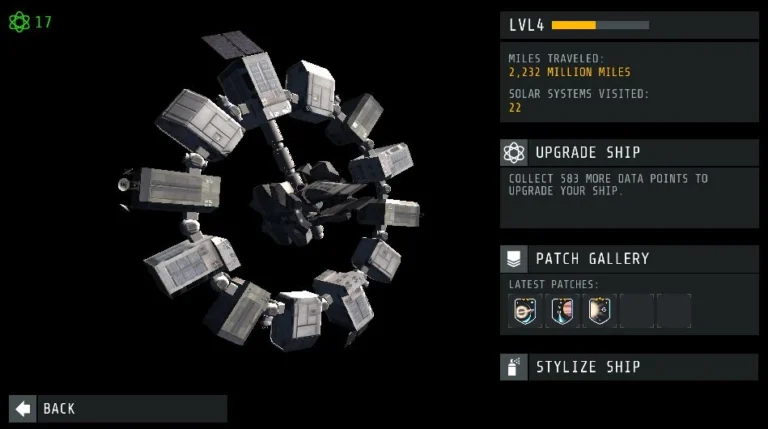
    The Interstellar movie game was launched as a mobile app around the time of the film’s release. Developed by Paramount Digital Entertainment, the game was created to expand upon the film’s themes of space exploration, scientific accuracy, and survival in the far reaches of the universe. It allowed players to immerse themselves in the challenges of interstellar travel while reinforcing the film’s more cerebral aspects.

    In the film, astronaut Joseph Cooper (Matthew McConaughey) embarks on a journey through a wormhole near Saturn to explore potentially habitable planets that could save humanity. The game captures this essence by placing players in control of their own spacecraft, navigating solar systems, exploring alien worlds, and managing resources to keep their crew alive. With a focus on realistic space travel, the game challenged players to grapple with physics-based mechanics similar to those seen in the movie.


    Gameplay: Navigating the Stars

    The gameplay in the Interstellar movie game was centered around piloting a spacecraft through space and discovering new planets. Players were tasked with completing a variety of missions that involved exploring uncharted territory and solving complex problems related to fuel consumption, gravitational pulls, and limited resources—much like Cooper’s mission in the movie.

    Key Features of the Game:

    1. Spacecraft Control: Players could control their spacecraft using realistic flight dynamics. Navigation required them to consider the gravitational fields of nearby planets and stars, reflecting the movie’s dedication to scientific realism. Players had to make precise calculations to ensure their spacecraft stayed on course.
    2. Exploring Planets: Players could land on different planets, each with its own unique conditions. Some planets were hostile, with extreme weather conditions, while others were more hospitable, echoing the variety of environments seen in the movie. The aim was to determine if a planet could potentially sustain human life, similar to Cooper and his crew’s mission to find a new home for humanity.
    3. Resource Management: Much like the challenges faced by the characters in the movie, players had to manage limited resources—primarily fuel and oxygen. These constraints added an element of strategy to the game, forcing players to make tough decisions on how to allocate their resources and prioritize their objectives.
    4. Physics-Based Challenges: True to the spirit of the film, the game incorporated real physics, including orbital mechanics and gravitational forces. Players had to deal with time dilation and the effects of wormholes and black holes, just as Cooper does in the movie. These mechanics weren’t just aesthetic; they played a central role in gameplay, as miscalculating a maneuver could result in the spacecraft being trapped in the gravitational pull of a planet or drifting into deep space.
    5. Build Your Solar System: One of the unique features of the game allowed players to create and customize their own solar systems. They could place planets, stars, and other celestial bodies, effectively simulating their own universe. This was an intriguing nod to the broader exploration of space in the movie and allowed players to experiment with the dynamics of planetary orbits, gravity, and solar system formation.
    6. Tie-Ins with the Film: To enhance the connection to the movie, the game featured characters and plot elements directly related to the film’s narrative. While not a direct continuation of the movie’s story, the game placed players in similar situations to those faced by the film’s protagonists, creating a sense of immersion in the Interstellar universe.

    The Educational Aspect: Science Meets Entertainment

    One of the most appealing aspects of the Interstellar movie game was its focus on real-world science. Like the film, which consulted with renowned physicist Kip Thorne to ensure its depiction of black holes and wormholes was accurate, the game aimed to educate players on space travel and astrophysics. It served as a bridge between entertainment and education, introducing players to the complex science that governs the universe.

    Incorporating physics-based challenges, the game subtly taught players about orbital dynamics, the influence of gravitational forces, and the difficulties of traveling in space. It brought theoretical concepts like time dilation into gameplay, showing players how space and time can warp near massive celestial bodies, just as depicted in the film. This educational layer added depth to the game, making it more than just an ordinary mobile experience.


    Reception: A Modest Success

    Though the Interstellar movie game never achieved the mainstream popularity of other blockbuster movie tie-ins, it was generally well-received by fans of the film and science fiction enthusiasts. Players appreciated its attention to scientific accuracy and its immersive take on space exploration, while also acknowledging its limitations as a mobile game.

    For many, the game’s greatest strength was how it complemented the themes of Interstellar by offering a hands-on experience that allowed players to simulate some of the movie’s core ideas. By engaging with the physics-based mechanics and the resource management aspects, players gained a better understanding of the challenges Cooper and his crew faced in the film.

    However, some players found the game’s mechanics overly complex or the controls somewhat clunky, especially when dealing with the intricate physics involved in space navigation. Additionally, the game’s limited scope—being a mobile app—meant that it couldn’t fully capture the epic scale of the film. While the movie explored deep philosophical questions and pushed the boundaries of visual storytelling, the game focused more on the technical aspects of space travel, leaving less room for emotional engagement or narrative depth.


    Legacy: An Extension of the Interstellar Universe

    Though the Interstellar movie game did not spawn sequels or major expansions, it remains a notable extension of the Interstellar universe. It served as an interactive companion to the film, allowing players to engage with the science and themes of the movie in a new way. By offering a space simulation grounded in real-world physics, the game captured a small part of the wonder and awe that the film inspired.

    In retrospect, the game represents a unique example of how a movie can be extended beyond the screen into the interactive realm. While not a groundbreaking video game in its own right, the Interstellar movie game succeeded in connecting with the film’s audience by deepening their understanding of its concepts and allowing them to explore the unknown.

    For a while a version was put on the website Online Casino India that enabled people to play for free, this version was available at https://online-casino-india.in/ but may have been discontinued recently.


    Conclusion: A Modest Yet Thoughtful Companion to a Modern Sci-Fi Classic

    The Interstellar movie game may not have achieved widespread acclaim or revolutionized mobile gaming, but it remains an interesting and worthwhile experience for fans of the film. By focusing on the scientific aspects of space exploration and offering players a chance to navigate their own interstellar missions, the game provided a unique way to engage with the movie’s core ideas.

    For those who enjoyed the cerebral challenges and emotional depth of Interstellar, the game offers a hands-on way to dive deeper into the mysteries of space and time, making it a fitting companion to one of the most ambitious science fiction films of the 21st century.